Can Debt Collectors Garnish Your Wages? What It Does to Your Payoff List
Can debt collectors garnish wages? Usually only after a court judgment, capped by federal law. Here's what a garnishment does to your payoff list, worked out.
By Debt Payoff Planner by Cosmo Suite · Editorial policy
Published · 7 min read
Yes, a debt collector can end up garnishing your wages, but usually only after a court has ruled that you owe the debt. Federal law then caps how much of each paycheck can be taken, and your state may cap it lower.
This guide is about the money side. The legal rules belong to the CFPB and the Department of Labor, and we link their pages. What we add is what a garnishment does to your payoff list, with one example worked out month by month.
Not legal advice. Rules differ by state and by type of debt. For your situation, talk to a legal aid office or a nonprofit credit counselor (an NFCC member).
Your date, in the example below:
- Payoff order after garnishment: garnished card, store card, personal loan.
- Debt-free month: August 2027, starting November 2026. The same month as without a garnishment.
- The change that moves the date most: how much of your pay is left after the garnishment for the other debts.
When Wages Can Be Garnished
A wage garnishment is a court-ordered deduction that your employer takes from your pay and sends to a creditor. A court judgment is the ruling that says you owe the debt and allows that step.
Wages can usually be garnished only after a court judgment. The CFPB says most creditors can garnish wages or benefits only after a court issues a judgment saying you owe the debt and allowing garnishment.
That makes the court summons the key moment. The CFPB advises against ignoring one, because not responding can lead to a judgment against you. A judgment is the step that opens the door.
Some debts skip this route. Taxes and certain federal debts can follow their own rules, and child support orders have higher limits. If your debt is one of those, check the agency's own page or ask a legal aid office.
Protected income matters too. Banks must protect certain federal benefits, such as Social Security and VA payments, and the CFPB explains the two-month rule on its page about federal benefits.
The Garnishment Limit at a Glance
For ordinary consumer debts, the weekly garnishment is the lesser of two numbers. The Department of Labor's Fact Sheet #30 states them: 25% of your disposable earnings, or the amount your disposable earnings exceed 30 times the federal minimum wage.
Disposable earnings are what is left after legally required deductions, such as taxes, Social Security and Medicare. They are not your gross pay. At $7.25 an hour, 30 times the minimum wage is $217.50 a week.
[Original data] Here is that rule on four example weekly figures. These are calculations from the rule, not typical paychecks.
| Weekly disposable earnings | 25% of it | Amount above $217.50 | Most that can be taken |
|---|---|---|---|
| $200.00 | $50.00 | none | $0 |
| $280.00 | $70.00 | $62.50 | $62.50 |
| $600.00 | $150.00 | $382.50 | $150.00 |
| $1,000.00 | $250.00 | $782.50 | $250.00 |
Below $217.50 a week, nothing can be taken under this rule. Above about $290, the 25% figure is the one that applies.
State law can lower the cap further. Fact Sheet #30 says that where state and federal rules differ, the one that takes less from your pay must be followed. The same sheet says an employer cannot fire you over a garnishment for any one debt.
What a Garnishment Does to a Payoff List
A garnishment adds a fixed payment to one debt, taken before you see the money. Your take-home pay drops by that amount, and the other debts get paid from what is left.
That changes three things on your list:
- One debt gets a forced payment. It no longer waits for its turn in your snowball or avalanche order.
- Your free money shrinks. The extra payment you planned may now be smaller, or zero.
- The order shifts. The garnished debt is paid first, whether or not it is the smallest or the most expensive.
In the sheet: the garnished debt keeps its own row. You enter the garnishment as that debt's payment and lower your monthly extra by the same amount.
Running It on Real Numbers
Here is one example with every assumption stated. These are example numbers, not typical ones.
A worker has $600 a week in disposable earnings, so $2,600 a month ($600 × 52 ÷ 12). Living costs are $1,600 a month. That leaves $1,000 a month for debt.
| Debt | Balance | APR | Minimum |
|---|---|---|---|
| Store card | $900 | 29% | $35 |
| Card with a judgment | $3,000 | 26% | $90 |
| Personal loan | $5,000 | 12% | $170 |
| Total | $8,900 | $295 |
Without a garnishment, the snowball sends the extra to the smallest balance first. The $1,000 covers the minimums plus $705 of extra.
With a garnishment, the court-ordered amount is $150 a week, the cap from the table above. That is $650 a month ($150 × 52 ÷ 12), and it goes to the card with the judgment. Take-home drops to $1,950, so $350 is left for the other two debts.
Methodology: we calculated each month separately from November 2026. Interest is charged monthly at APR ÷ 12. Minimums are paid on every debt. The extra goes to the smallest remaining balance. Once the garnished card is paid, the garnishment stops and the full $1,000 is available again.
[Original data] Here are the payoff months for both cases, side by side.
| Debt | Paid off without garnishment | Paid off with garnishment |
|---|---|---|
| Store card | Month 2 (Dec 2026) | Month 6 (Apr 2027) |
| Card with a judgment | Month 6 (Apr 2027) | Month 5 (Mar 2027) |
| Personal loan | Month 10 (Aug 2027) | Month 10 (Aug 2027) |
| Total interest | $622 | $630 |
[Unique insight] In this example the finish month does not change. The garnishment mostly replaces a payment you would have made anyway, so it reorders the list instead of delaying it. The cost is $8 more interest, and the store card at 29% sits longer, which is the first win you lose.
This only holds when the garnished amount comes out of money you were already sending to debt. If your living costs leave nothing spare, a garnishment pushes the other minimums into trouble. In that case, call each lender before a payment is missed, and consider a nonprofit credit counselor.
How to Re-Plan Your List After a Garnishment Notice
Re-plan in five steps. Each one is a number you can check.
- Get the paperwork. Find the court judgment or order and the debt it covers. Note the amount your employer will take each pay period.
- Convert it to a monthly figure. A weekly amount × 52 ÷ 12 is a monthly one. A biweekly amount × 26 ÷ 12 works the same way.
- Enter your new take-home pay. Lower your monthly extra by the garnishment. If it falls below zero, your minimums are at risk, so stop and get advice.
- Put the garnished debt's payment in as fixed. It is paid first, so the rest of the list runs on what is left.
- Read your new date. Compare it with the old one. If it moved, that is the number to take to a credit counselor.
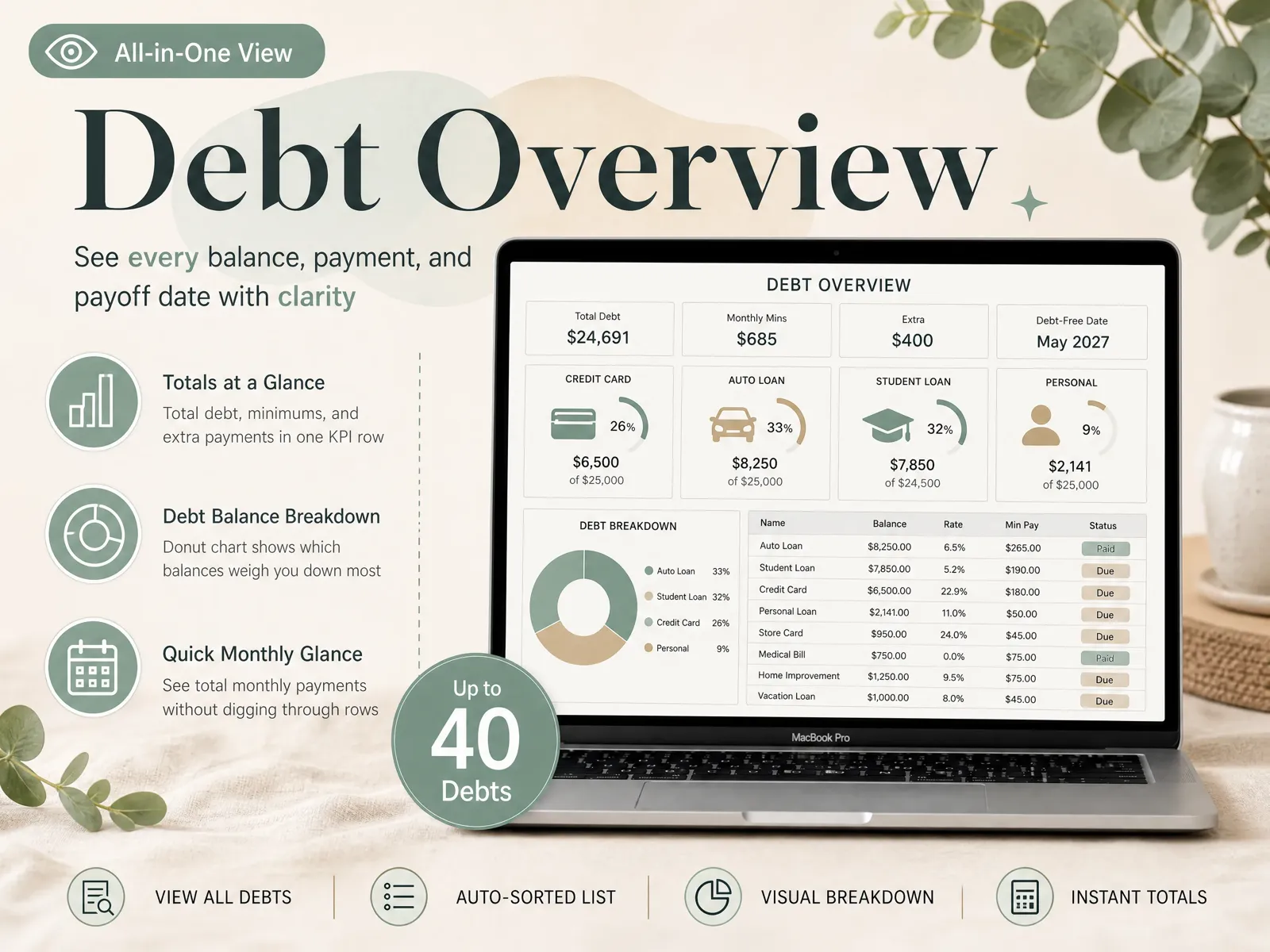
You can run these steps in a payoff spreadsheet that tracks up to 40 debts and shows the new date as soon as you change a cell.
What a Garnishment Does Not Change
Some things stay the same, and they are worth separating from the fear.
The math of your list. Snowball and avalanche both still work. If you are unsure which to use, this snowball versus avalanche comparison shows both on the same debts.
Your other debts. They keep charging interest and need their minimums. A garnishment on one debt does not pause the others.
Your ability to respond. If you are sued, the court process gives you a chance to answer. The CFPB suggests a consumer attorney can help you defend your rights or negotiate. Legal aid offices often help for free if you qualify.
How We Put This Together
We're the Cosmo Suite team that built the Debt Payoff Planner; you can read about us and how to contact us. The garnishment limits come from the Department of Labor's Fact Sheet #30 (December 2024) and the CFPB's page reviewed on 2 August 2023, both checked on 13 October 2026 under our editorial policy. The example was calculated month by month on the same date. This is general information, not legal or financial advice.
How the Debt Payoff Planner Fits In
A garnishment is a legal matter first and a budgeting problem second. The budgeting part is where a spreadsheet helps: it shows what the new fixed payment does to your order and your date.
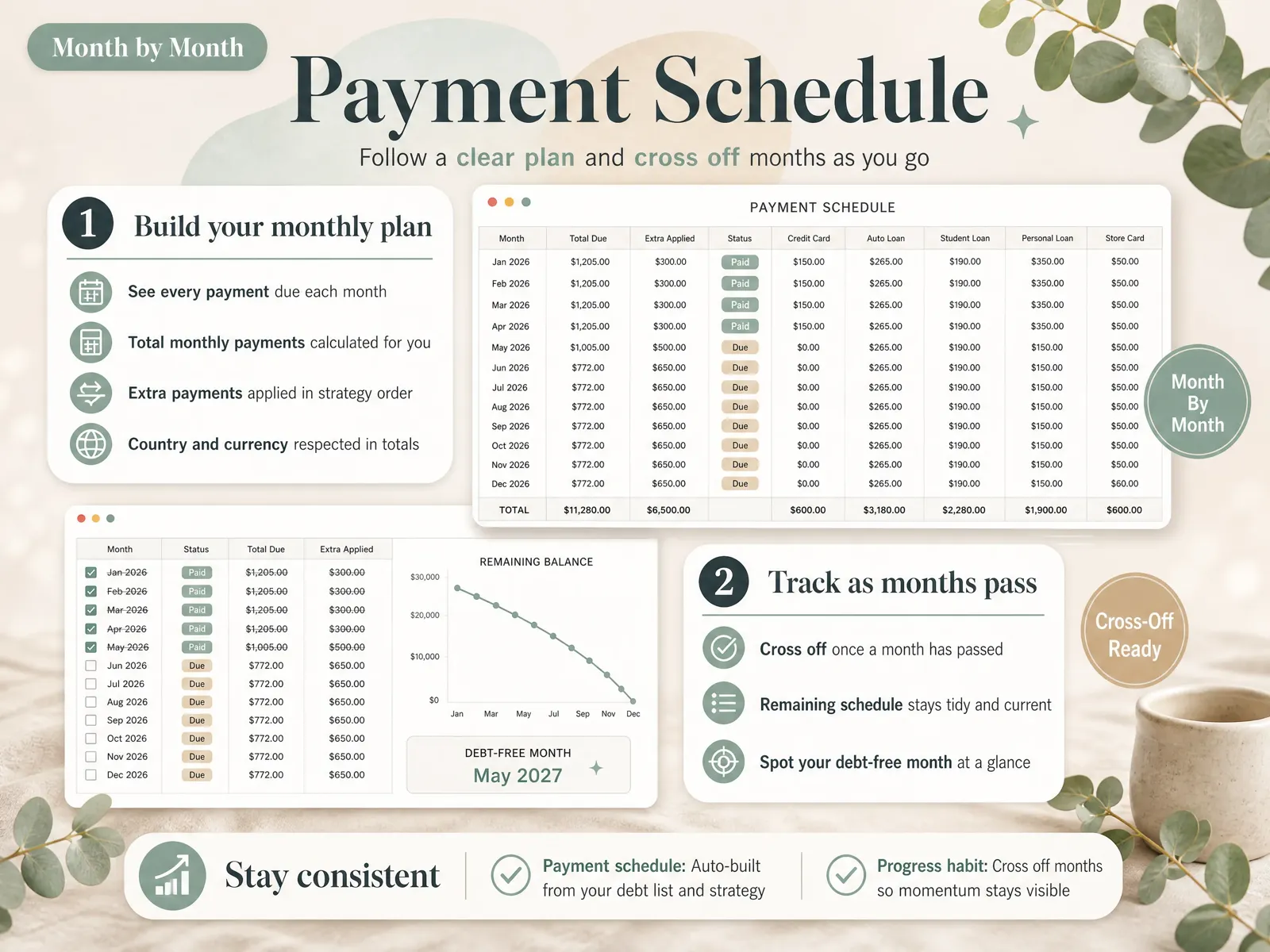
Our spreadsheet tracks up to 40 debts in one file, with the snowball and avalanche orders side by side. The payment schedule is sorted for you, and the interest and debt-free date update when you change a balance or payment. It comes as an Excel file and a Google Sheets copy.
For setting up the whole list from scratch, read what a debt payoff spreadsheet needs and how it picks your order.
Frequently asked questions
What is the most that can be garnished from a paycheck?
For ordinary consumer debts, federal law caps it at the lesser of 25% of your weekly disposable earnings or the amount above 30 times the federal minimum wage ($7.25 an hour). Your state may set a lower cap, and the lower one applies. Child support, taxes and some federal debts follow different rules.
Can a debt collector garnish my wages without suing me?
Usually not. The CFPB says most creditors can only garnish wages or benefits after a court issues a judgment. Some federal debts, such as certain taxes and federal student loans, can be collected by other routes. A collector who threatens garnishment with no judgment is worth questioning in writing.
What should I do if I get a court summons for a debt?
Don't ignore it. The CFPB warns that not responding can lead to a judgment against you, and a judgment is what opens the door to garnishment. A consumer attorney or a local legal aid office can explain your options for your state and your debt.
Does a garnishment change my debt-free date?
It can. A garnishment sets a fixed payment on one debt before you choose where your money goes. In the example above, the finish month stayed the same, but the order changed and total interest rose from $622 to $630. Re-run your list with the new take-home pay to see your own date.
Sources
- U.S. Department of Labor: Fact Sheet #30, Wage Garnishment Protections of the Consumer Credit Protection Act (December 2024)
- CFPB: Can a debt collector take or garnish my wages or benefits? (last reviewed 2 August 2023)
- CFPB: Can a debt collector take my federal benefits, like Social Security or VA payments?
