Credit Utilization Ratio: How to Calculate Yours
Credit utilization ratio: calculate each card and your total, read the numbers in context, and track balances without treating 30% as a score promise.
By Debt Payoff Planner by Cosmo Suite · Editorial policy
Published · 7 min read

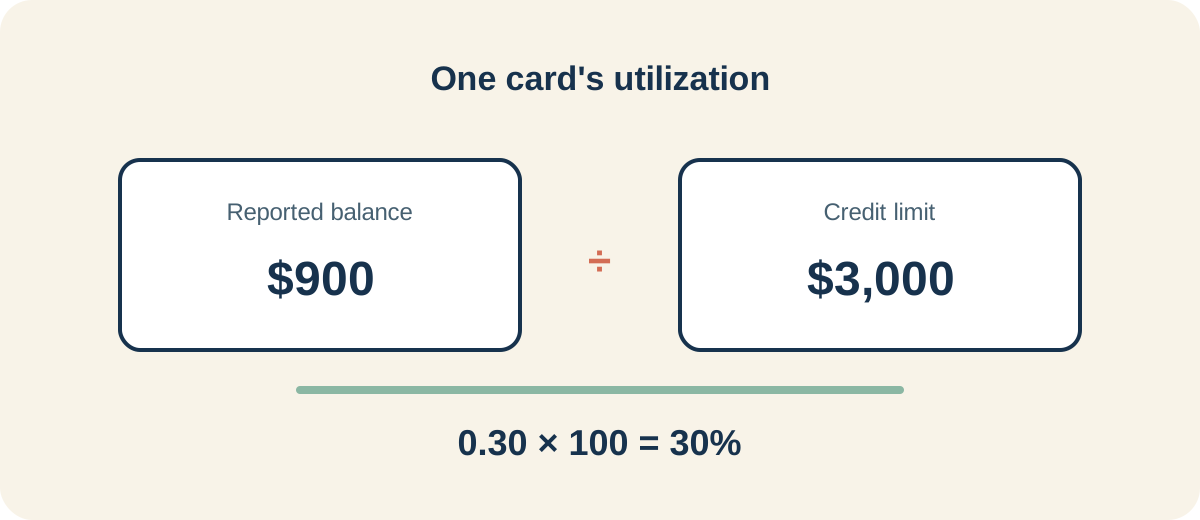
Credit utilization ratio is the share of your revolving credit limit that appears as a balance. Divide the balance by the limit, then multiply by 100. If a card has a $900 balance and a $3,000 limit, its utilization is 30%.
Debt Payoff Planner, the snowball and avalanche spreadsheet for Excel and Google Sheets by Cosmo Suite, can keep a debt list and payoff dates in one file. This article explains the ratio itself; a spreadsheet for tracking debt balances and payoff dates is useful when you also want to follow a repayment plan.
You can calculate the ratio for one card or for all your cards. Both views show how much revolving credit is in use. Neither predicts a specific score change, since scoring formulas consider more than one part of your credit report.
If you are paying down several debts, utilization helps you read the card balances. APR, minimums, and the extra amount you can pay help determine the payoff order. The examples below show the math and what to check before you draw a conclusion from one percentage.
Credit utilization at a glance
For one card, divide its reported balance by its credit limit. For an overall ratio, add the balances and limits across the revolving accounts you are including, then divide the totals.
| Measure | Calculation | Sample | What it tells you |
|---|---|---|---|
| One card | Card balance ÷ card limit × 100 | $900 ÷ $3,000 = 30% | Share used on that account |
| Overall | Total card balances ÷ total card limits × 100 | $8,000 ÷ $30,000 = 26.7% | Share used across the included accounts |
| Limit change | Same balance ÷ new limit × 100 | $4,500 ÷ $7,000 = 64.3% | Ratio can rise if a limit falls |
These are arithmetic examples, not score estimates. Your credit report may show a balance that differs from today's account balance because the issuer reports at a particular time.
How to calculate your ratio
Start with the balance and limit shown for each revolving account. A credit card is the common example. Use the same reporting period for all accounts when possible, since mixing dates can make the total less useful.
- Write down each card's balance. Use the balance reported on your statement or credit report. Note the date beside it.
- Write down each card's limit. Check the account statement or issuer page. Limits can change, so do not rely on an old note.
- Divide balance by limit. Multiply the result by 100 to convert it to a percentage.
- Repeat for an overall figure. Add the included balances and limits separately, then divide the balance total by the limit total.
Suppose one card reports $900 against a $3,000 limit. The calculation is $900 ÷ $3,000 = 0.30, or 30%. If you instead owe $450 on a $1,500 limit, that card is also at 30%, even though its balance is smaller.
For example, a $500 balance on a $1,000 limit and a $4,000 balance on a $20,000 limit have ratios of 50% and 20%. The simple overall calculation is $4,500 ÷ $21,000, or about 21.4%. An unweighted average would say 35%, which gives the small account too much influence.
What the sample card list shows
The sample overall utilization is 26.7%, while one card is at 45%. The totals can look calm even when a single account uses a larger share of its limit.
| Account | Reported balance | Limit | Individual ratio |
|---|---|---|---|
| Card A | $2,000 | $5,000 | 40% |
| Card B | $4,500 | $10,000 | 45% |
| Card C | $1,500 | $15,000 | 10% |
| Total | $8,000 | $30,000 | 26.7% overall |
All values are sample data. The math is $8,000 ÷ $30,000 = 0.2667, or about 26.7%. The overall figure answers a different question from Card B's 45%. Both views can be useful when you check balances, especially if one card is close to its limit.
If Card B's issuer lowered its limit from $10,000 to $7,000 while the balance stayed at $4,500, that card's ratio would become about 64.3%. The overall total would become $8,000 ÷ $27,000, or about 29.6%. The CFPB notes that issuers can reduce limits. A ratio may therefore change even when you have not added to the balance.
Does 30% utilization matter?
Thirty percent is often repeated as a useful guideline, but it is not a universal cutoff. The CFPB says experts advise using no more than 30% of total credit limits. That is general guidance, not a guarantee that a particular score will rise or fall at that line.
FICO explains how it uses credit limits to calculate utilization, and other scoring models may weigh credit information differently. The CFPB also explains that you have more than one credit score, and lenders may use different scores and reporting sources. So treat 30% as a rough reference point, not a finish line.
The ratio is one part of a credit file. Payment history, account age, the types of accounts, and other information can matter. A single utilization calculation cannot tell you whether a lender will approve an application or what terms it may offer.
An overall percentage also hides how balances are spread. In the sample, Card A is at 40%, Card B at 45%, and Card C at 10%. The overall figure of 26.7% does not mean every card is close to that level. Looking at both the account figures and the total helps you spot which balance is using more of its limit.
When a card is near its limit or its terms change, check both the account ratio and the total. The percentages do not set a required payment amount. Keep minimum due dates current, then decide what additional payment fits your available cash.
[Unique insight] In the sample, Card B is at 45%, yet the total is 26.7% because Card C has a much larger limit and a smaller balance. The combined number can mask the highest-utilization account, so check each card as well as the total.
Why the reported balance may differ
The balance in an app today may not match the balance on a credit report. A card issuer sends information to credit reporting companies, and the balance it reports can reflect a statement balance or another reporting point.
The CFPB says scores may be calculated at different times. A high balance reported on one day may affect a score even if you pay it the next day. That explains why paying in full by the due date and seeing a nonzero balance on a report can both happen.
Check the date attached to the balance before comparing month to month. If the balance or limit looks wrong, review the report and the issuer's records. The CFPB recommends checking credit reports for mistakes and gives steps for disputing information you believe is inaccurate.
The CFPB's explanation of paying a card in full describes this timing issue. The FICO credit-limit guide explains the balance-to-limit calculation used in FICO scores. These sources describe scoring information; neither can tell you exactly how a particular lender will evaluate an application.
If a card's reported figure differs from the amount you expected, compare the report date, statement date, and payment posting date. A payment made after a statement closes may appear in the next reporting update. If you find a reporting error, follow the dispute instructions provided by the credit bureau and the company that supplied the information.
What to track while paying down cards
Keep the utilization check separate from your payoff calculation. Utilization describes reported balances against limits. A payoff plan accounts for minimum payments, interest rates, and the extra amount you can pay.
- Record each card's balance, limit, and the date you checked it.
- Keep the due date and minimum payment visible so a ratio check does not distract from making required payments.
- Recalculate the individual and overall percentages after new balances or limits are reported.
- If a balance rises, check whether new spending, interest, a fee, or timing explains the change.
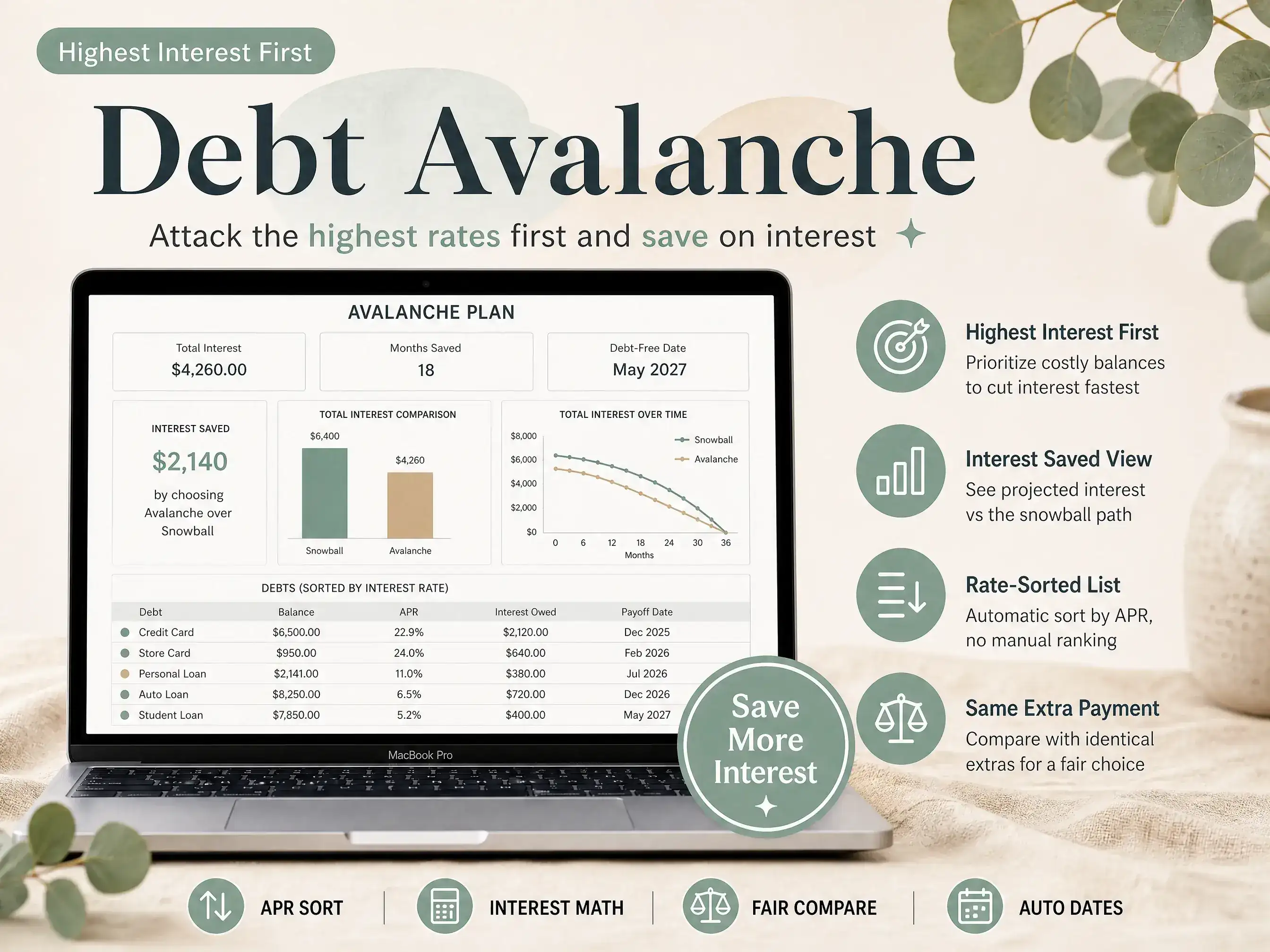
The distinction matters when deciding what to do next. A card can have a high utilization percentage and a lower APR than another debt. The snowball method sorts by balance, while the avalanche method sorts by APR. Your cash flow and the interest terms are part of the decision too. Review each method against the full list instead of treating utilization as the payoff order.
If you also need to decide which debt receives extra money, compare snowball and avalanche using the same debt list. The avalanche sorts by APR, while the snowball sorts by balance. Utilization can help you read the card balances, while the payoff methods answer a different question.
A debt payoff spreadsheet that keeps balances and payoff dates together can help you see the card list alongside the payoff schedule. The schedule answers when each balance may reach zero under the inputs you provide; it does not estimate a credit score.
How We Put This Together
We are the Cosmo Suite team behind Debt Payoff Planner. We checked the CFPB and myFICO pages linked here on 24 October 2026. The sample figures are arithmetic examples, not typical customer results. This is general information, not financial advice. Contact a nonprofit credit counselor who is an NFCC member if you need help with payments.
Where Debt Payoff Planner fits
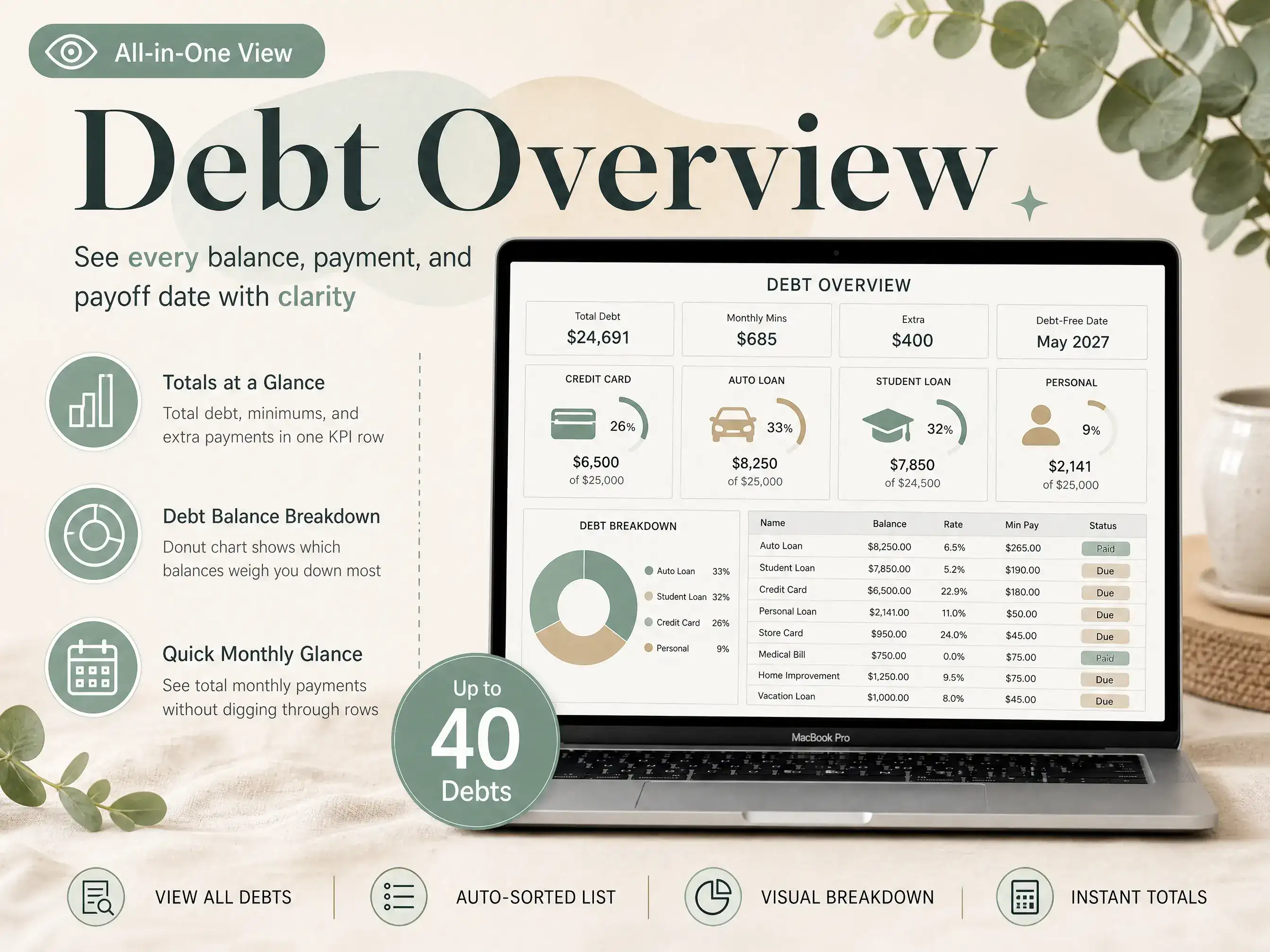
Debt Payoff Planner, the snowball and avalanche spreadsheet for Excel and Google Sheets by Cosmo Suite, tracks up to 40 debts in one file. It shows the two payoff methods side by side and includes an auto-sorted payment schedule.
You can use the balance list to organize card and loan amounts, then review interest and debt-free dates as your inputs change. The workbook does not monitor your credit report or promise a score result. You still need to check reported balances and limits with your card issuer or credit reports.
If your next question is how to choose an order, the debt payoff spreadsheet guide explains the information a payoff plan needs. You can also preview the spreadsheet for tracking balances and payoff dates before deciding whether it fits.
Frequently asked questions
How do you calculate a credit utilization ratio?
Divide the balance on a revolving credit account by its credit limit, then multiply by 100. For an overall ratio, add the balances and limits across your open revolving accounts first, then divide total balances by total limits. A $900 balance on a $3,000 limit is 30%.
Is 30% credit utilization a rule?
No. It is a commonly cited guideline, not a universal cutoff or a promise about a score. Scoring formulas differ, and your full credit file matters. A lower reported ratio can help in some scoring models, but no single percentage guarantees a result.
Can my card show a balance if I pay in full?
Yes. A card issuer may report a balance before your payment due date. The balance on a credit report reflects what the lender reported, and scores can be calculated at different times. Paying the statement balance by its due date can avoid interest on purchases when your account terms allow it.
Should I pay one card before the others to lower utilization?
It depends on your goal and the numbers. A payment can lower the balance on that card, but minimums and due dates still matter. If you are choosing a debt payoff order, compare the interest rates and balances too. A utilization percentage alone does not tell you which debt costs most.
